Contents
- The importance of humidity and microclimate for plants
- Control methods and equipment
- Practical advice from experienced growers on stabilisation
The importance of humidity and microclimate for plants
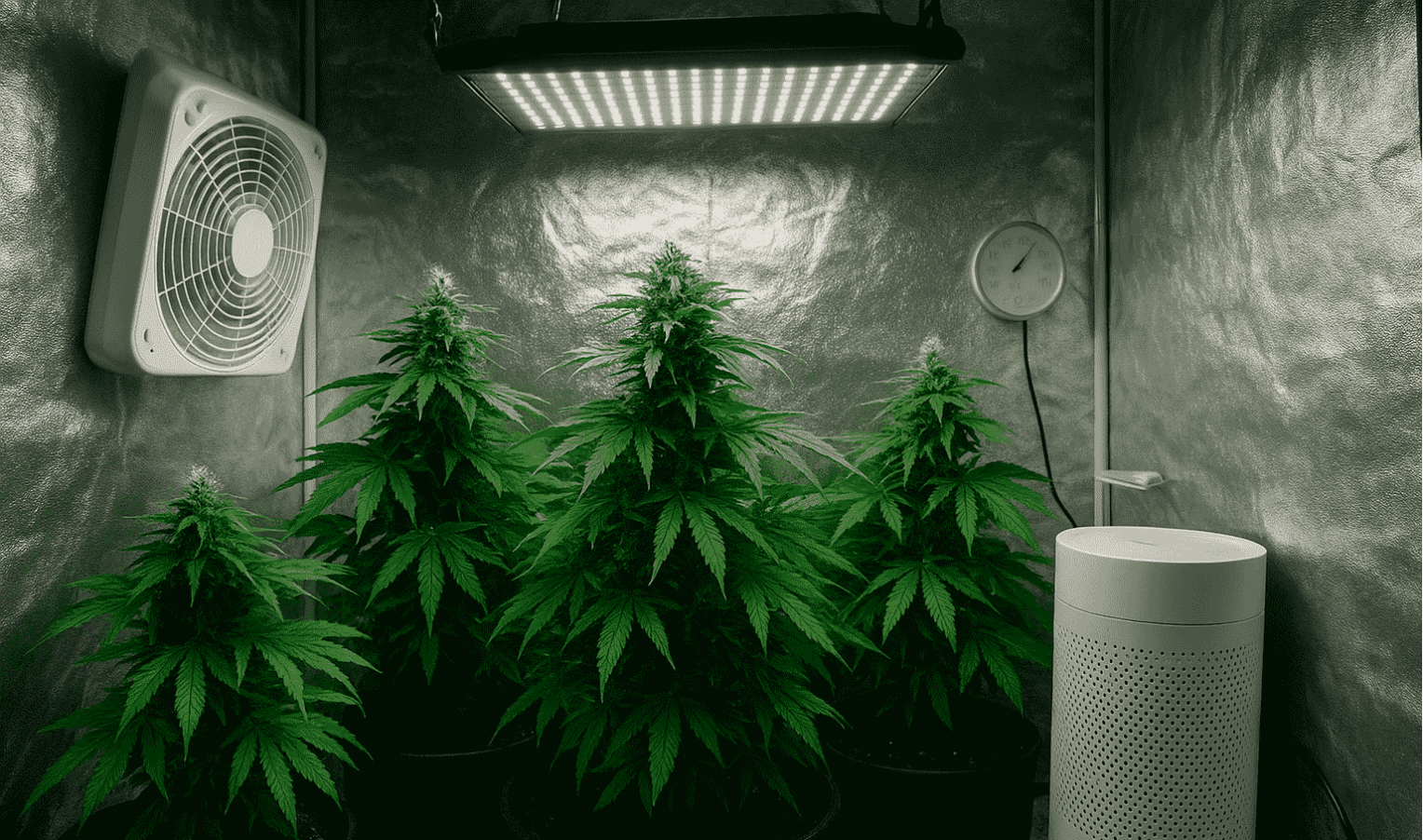
Humidity in a grow box is one of the key factors determining the health and productivity of crops. Optimal humidity for plants creates the right microclimate for plants, where moisture exchange in the room and ventilation for plants are in balance. If the moisture level is too low, the sprouts may dry out, and if the humidity is too high, there is a risk of fungal diseases and mould.
It is especially important to understand that humidity in cannabis cultivation is directly related to plant nutrition. When the climate in the plant room is unstable, the roots absorb nutrients less efficiently, which can lead to errors in feeding. Therefore, competent humidity control not only helps to maintain stable humidity for the sprouts, but also avoids nutrition problems. In this context, it is important to remember: to avoid overfeeding, you need to ensure that humidity and nutrition are balanced. With proper humidity control, plants absorb fertilisers evenly, which reduces the risk of excess salt accumulation and stress.
Thus, controlling humidity in a room is not just a technical task, but the basis for healthy growth. Regulating humidity and creating a stable microclimate allows you to maintain optimal conditions and prevent fluctuations that can negatively affect crop development.
Control methods and equipment
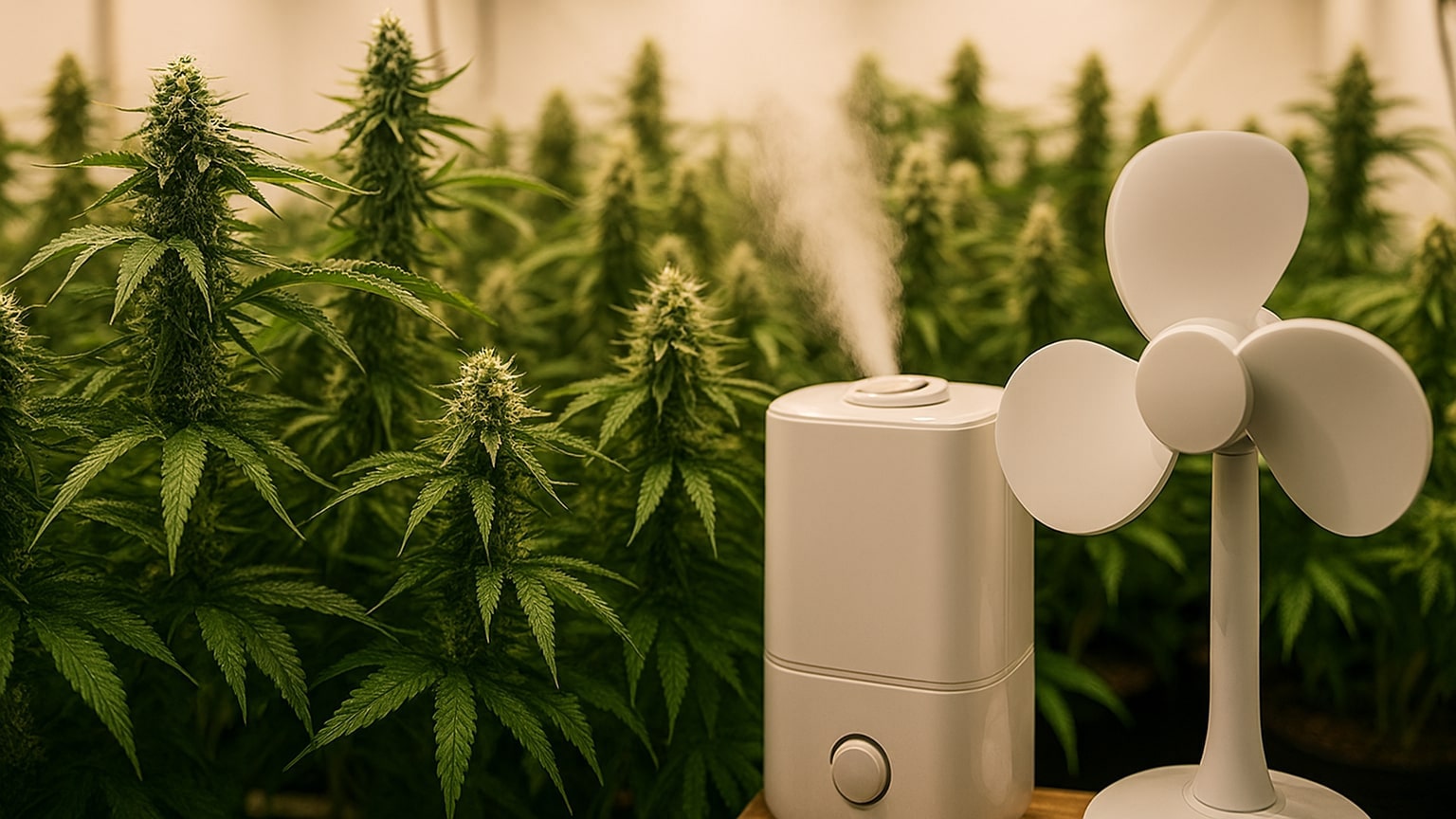
To understand how to stabilise humidity in a grow box, it is important to take a comprehensive approach. Humidity control and humidity regulation are achieved through a combination of equipment and best practices.
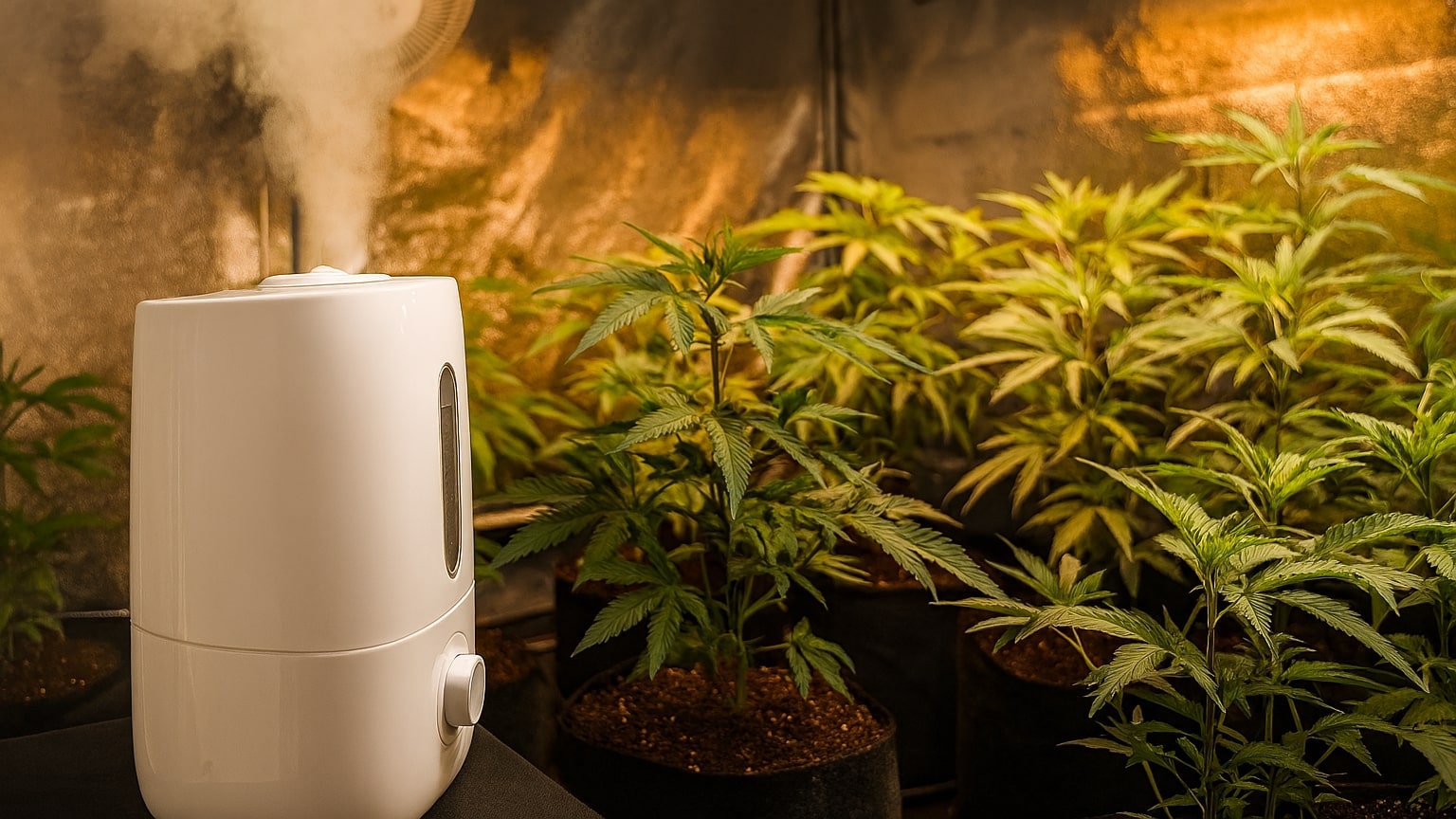
Grow box humidifier
- Maintains stable humidity for seedlings.
- Especially useful in the early stages when plants require high moisture levels.
Ventilation systems for plants
- Ensure proper moisture exchange in the room.
- Prevent air stagnation and mould growth.
Dehumidifiers and air conditioners
- Reduce humidity when it is excessive.
- They allow you to create the optimal indoor climate for plants, even during the hot season.
Automatic sensors and controllers
- They allow you to control the humidity in the room in real time.
- They eliminate sudden changes and help maintain optimal humidity for plants at different stages.
Experienced growers always take humidity levels and microclimate conditions into account when watering cannabis plants. Watering is carried out in measured doses so as not to overload the root system and cause over-watering. Combined with humidity control equipment, this helps to avoid mistakes and maintain a stable microclimate for plants.
Practical advice from experienced growers on stabilisation
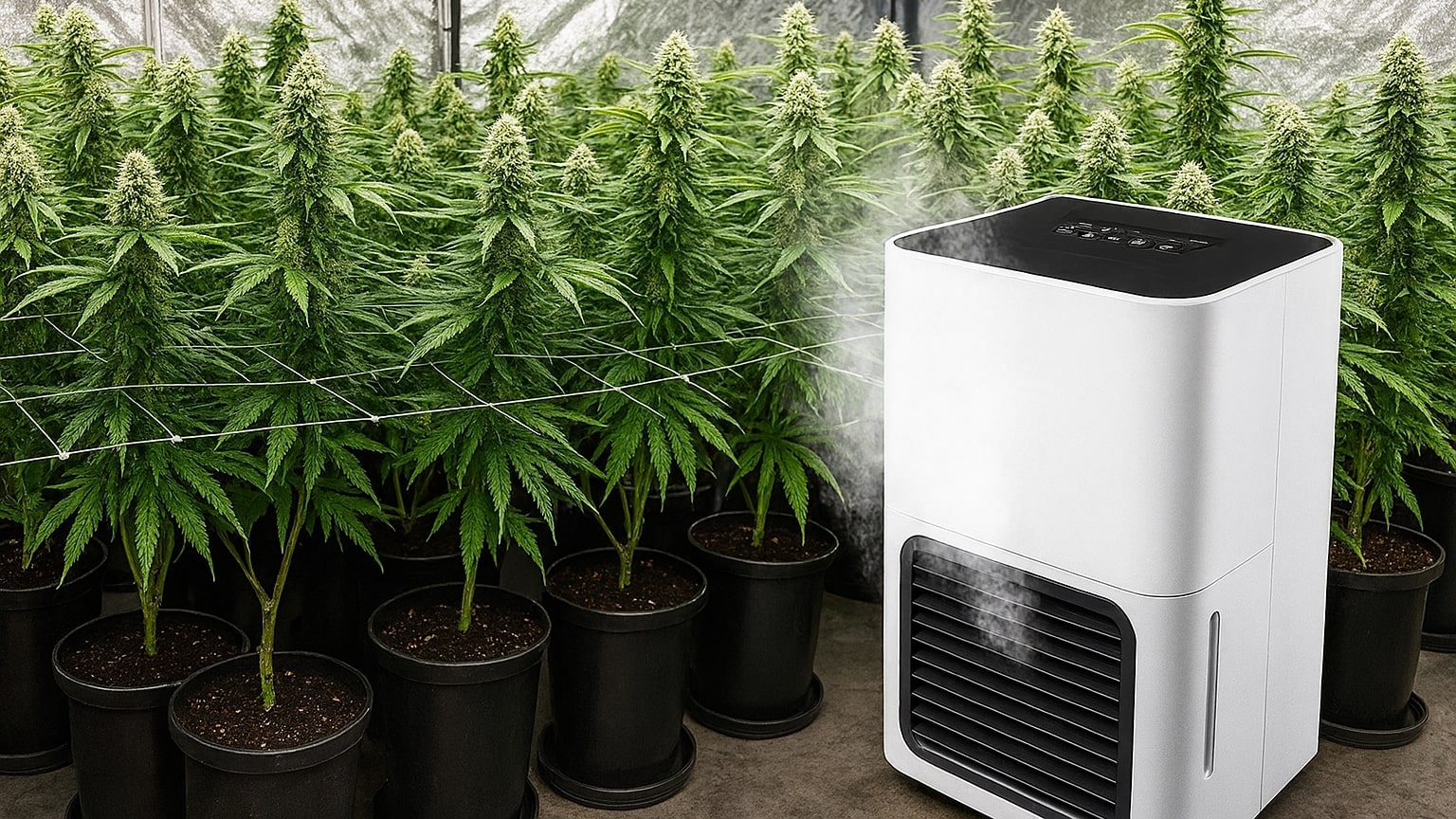
To create a stable microclimate for plants and avoid humidity fluctuations, it is important to combine technical solutions with competent agricultural techniques. Humidity control in the room should be systematic: from ventilation to regular monitoring of indicators.
Organise uniform ventilation: air circulation prevents moisture stagnation and helps maintain optimal humidity for plants.
Use humidity control equipment: sensors and automatic controllers allow you to adjust indicators in real time.
Monitor the stages of growth:
- Sprouts — 65–70% humidity.
- Vegetation — 55–65%.
- Flowering — 40–50%.
Combine methods: a humidifier for the grow box, a dehumidifier and ventilation for plants work more effectively together than separately.
Consider the characteristics of the varieties:
- For sativa, the optimal humidity is slightly lower — about 50–55% during the vegetation stage and 40–45% during flowering. Sativas tolerate drier climates better.
- Indica strains are more comfortable in a more humid microclimate — 60–65% during the vegetative stage and 45–50% during flowering. This helps to avoid stress and maintain stable humidity for seedlings and adult plants.
Special attention should be paid to modern hydroponic systems. For example, when growing cannabis in a Recirculating Deep Water Culture (RDWC) system, stable humidity and proper moisture exchange in the room directly affect nutrient uptake. In such a system, the roots are in an oxygen-rich solution, and any fluctuations in air humidity can disrupt the nutritional balance. Therefore, competent humidity control helps to avoid stress and maintain high yields.
Thus, practical advice boils down to comprehensive humidity management: ventilation, equipment, and understanding the stages of growth. This allows you to create a stable microclimate for plants and ensure stable humidity for seedlings and mature crops.
Attention! Errors Seeds does not encourage you to grow cannabis and does not assist in any way with this activity. Growing cannabis is prohibited by Ukrainian law. This article is for scientific and informational purposes only.
Write a comment