
Contents
- The Origin of THCV and Its Place Among Cannabinoids
- THCV Properties and How It Differs from Other Cannabinoids
- THCV: Effects, Benefits, and Medical Uses
The Origin of THCV and Its Place Among Cannabinoids
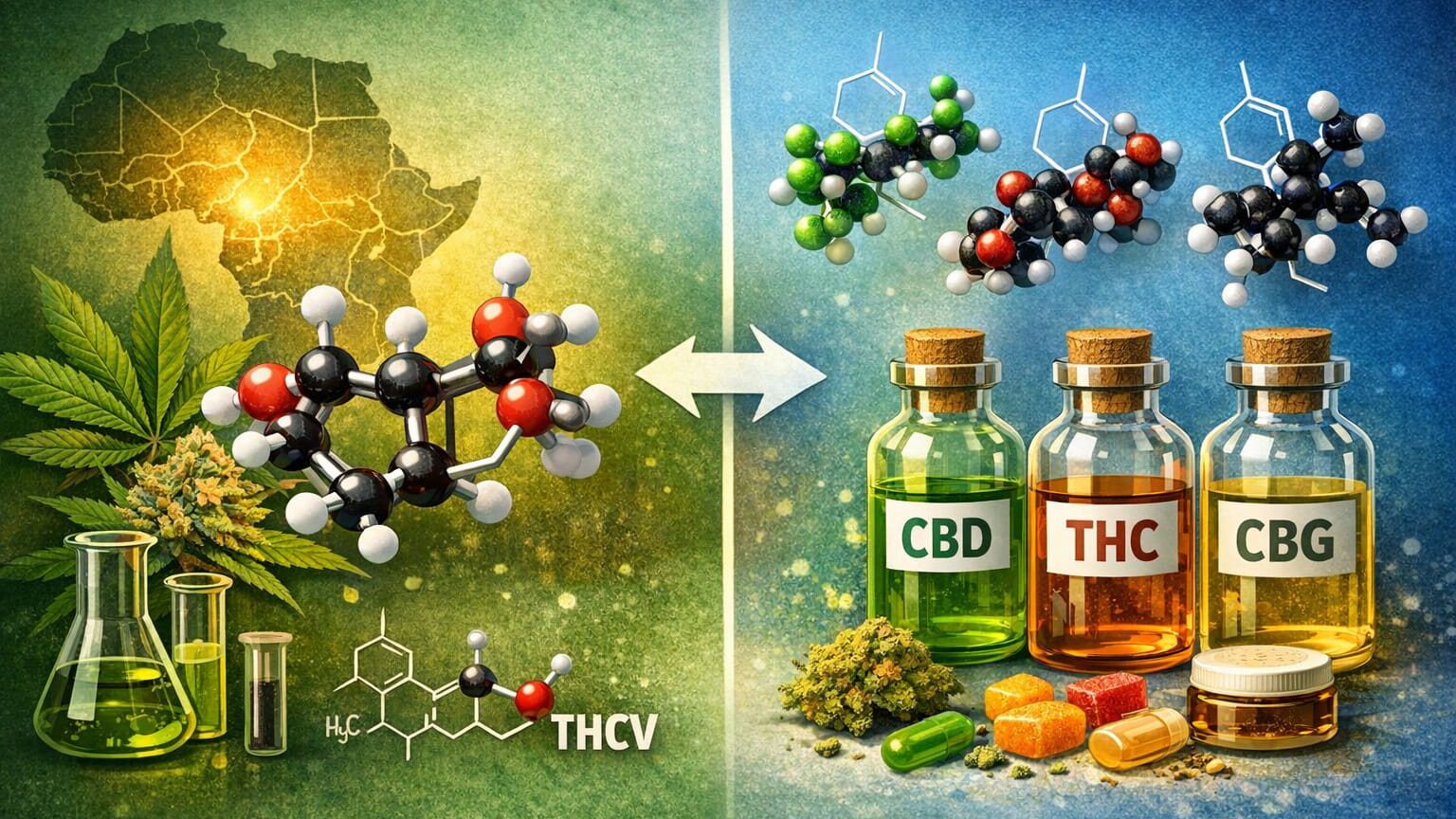
Tetrahydrocannabivarin (THCV) is a rare member of the cannabinoid family that was first discovered in African and Asian cannabis strains. Its chemical structure resembles that of tetrahydrocannabinol (THC), but differs in having a shorter side chain, which gives the compound its unique properties. It is this feature that explains the difference between THC and THCV and makes THCV a subject of particular interest to researchers.
If we compare the origin of THCV with other cannabinoids, we can draw an analogy with plants: just as the color of a light affects the growth and flowering of crops, determining their development and appearance, so too does the chemical structure of cannabinoids influence their effect on the body. In the case of THCV, this “structural configuration” opens up new prospects for medicine and science, distinguishing it from better-known compounds like THC and CBD.

THCV Properties and How It Differs from Other Cannabinoids
THCV holds a special place among cannabinoids due to its unique structure and effects on the body. Unlike THC and CBD, it exhibits specific effects that make it promising for medicine and research. To better understand the differences, let’s examine the key points:
THCV vs. THC
- In small doses, THCV causes virtually no euphoria.
- In high doses, it may exhibit mild psychoactivity, but of a more stimulating nature.
- Unlike THC, which increases appetite, THCV can actually suppress it.
THCV vs. CBD
- CBD is known for its calming effects, while THCV, on the other hand, can boost concentration and energy.
- Both cannabinoids interact with the endocannabinoid system, but they do so in different ways, which explains the difference in their properties.
THCV Properties and Effects on the Body
- Regulation of appetite and metabolism.
- Potential impact on blood sugar levels.
- A stimulating effect that may be beneficial for cognitive function.
An analogy can be drawn with plant cultivation: just as mineral nutrition for cannabis determines its growth, health, and crop quality, so too does the chemical structure of cannabinoids shape their properties and effects on the body. THCV differs from other compounds precisely because of its “biochemical makeup,” which opens up new possibilities for medicine and science.

THCV: Effects, Benefits, and Medical Uses
THCV is increasingly viewed as a promising cannabinoid due to its unique properties. Its effects on the body differ from the familiar effects of THC and CBD, making it an area of interest for medicine and science.
Key areas where the benefits of THCV are being studied:
1. Weight and appetite control
- Unlike THC, which increases hunger, THCV can reduce it.
- This property makes it a potential aid in weight loss programs.
2. Metabolic effects
- Studies suggest a possible impact on blood sugar levels.
- THCV may be beneficial for diabetes and other metabolic disorders.
3. Cognitive function
- Its stimulating effect promotes concentration and mental clarity.
- Unlike CBD, which has a relaxing effect, THCV can boost energy and alertness.
It is important to note that further clinical studies are needed to confirm these effects. Scientists use various analytical methods, and just as they measure THC and CBD percentages in the plant to assess its quality and properties, THCV concentration requires precise laboratory measurements to determine its effect on the body.
Thus, the medical use of THCV opens up new horizons: from weight management to cognitive function support.
Attention! Errors Seeds does not encourage you to grow cannabis and does not assist in any way with this activity. Growing cannabis is prohibited by Ukrainian law. This article is for scientific and informational purposes only.
Write a comment